
Retort bags (also called retort pouches) are high-temperature, sterilizable flexible packaging designed to withstand retort processing—typically 110°C–125°C steam or hot water sterilization. They are widely used as a lightweight alternative to metal cans and glass jars for shelf-stable foods.
Compared with traditional rigid packaging, retort bags are lighter, space-saving, faster to heat, and more cost-effective while maintaining long shelf life and food safety.
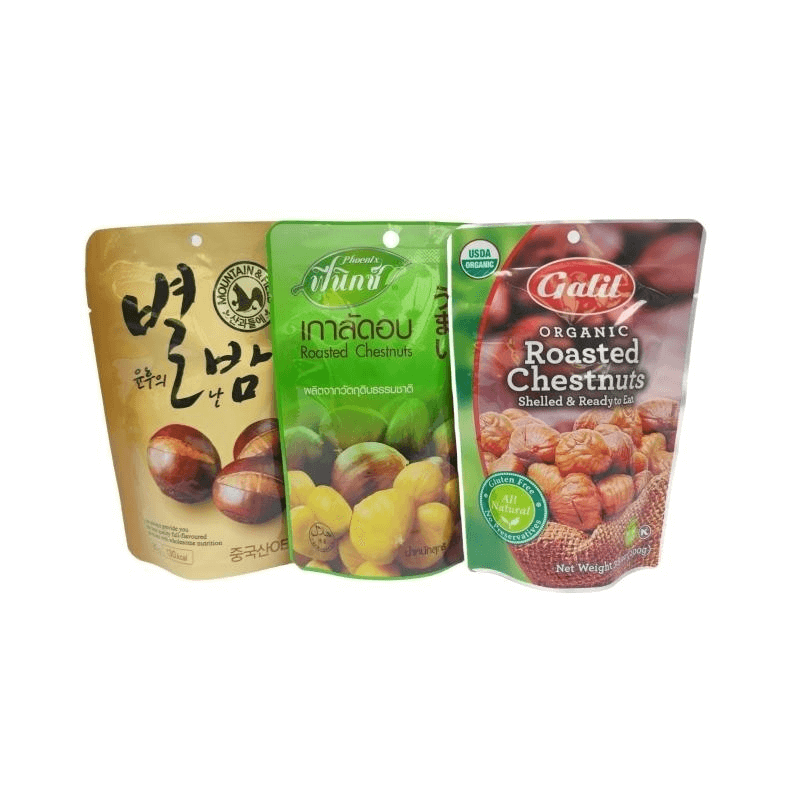
PET / AL / RCPP (classic high-barrier retort pouch)
PET / EVOH / RCPP (transparent, aluminum-free)
Nylon / AL / RCPP (extra puncture resistance)
AlxoPET/NY / AL / RCPP (extra ultra barrier)
Applications of Retort Bags
Retort bags are widely used across food industries:
- Ready-to-eat meals
- Soups & broths
- Sauces & gravies
- Baby food & purees
- Pet food
- Seafood & meat products
- Rice, noodles, curries
They are also increasingly used in military rations and emergency food supplies.
Retort Bags vs Cans & Glass Jars
| Feature | Retort Bags | Metal Cans | Glass Jars |
| Weight | Very light | Heavy | Heavy |
| Heating speed | Fast | Slow | Slow |
| Transportation cost | Low | High | High |
| Breakage risk | Low | None | High |
| Design flexibility | High | Low | Medium |
Quality Tests for Retort Bags
To ensure safety and performance, retort bags undergo strict testing:
- Retort sterilization test (110–125°C)
- Seal strength test
- Burst test
- Drop test
- Puncture resistance test
- Migration & food safety tests
Only bags that pass all tests are approved for commercial use.
Customization Options
Retort bags can be fully customized:
- Size & capacity (50ml–5L)
- Bag style (stand-up, flat, spout, shaped)
- Spout types & positions
- Printing up to 10–11 colors
- Matte, gloss, or soft-touch finish
- Tear notches & laser scoring
Sustainability & Retort Bags
Modern retort packaging is evolving toward:
- Aluminum-free structures
- Mono-material retort solutions
- Reduced material thickness
- Lower carbon footprint compared to cans