
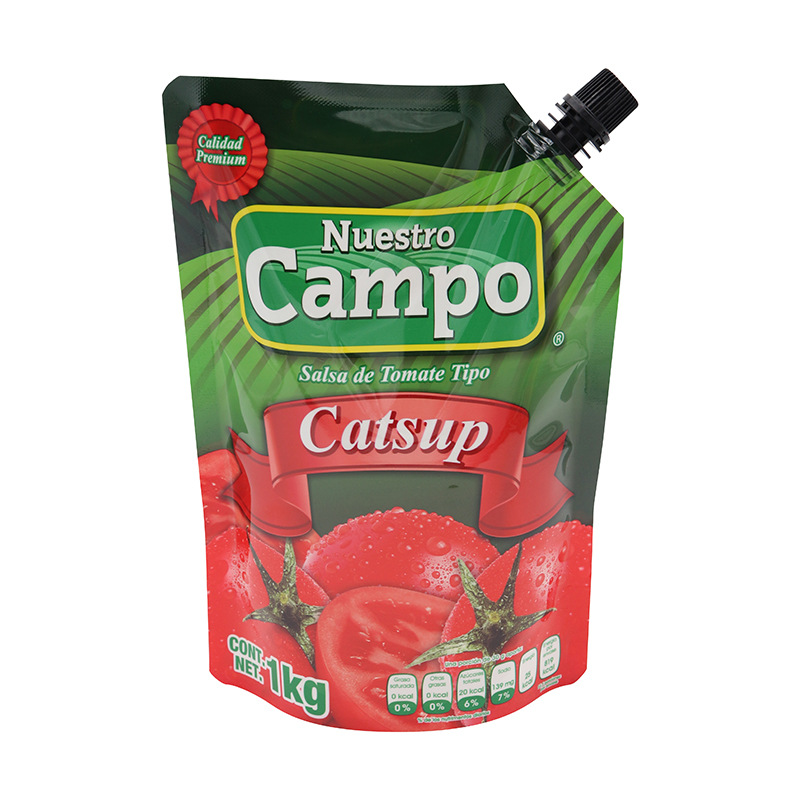
ketchup spout pouches manufacturer
Spout bags for ketchup must balance functionality, safety, and user experience while addressing the unique challenges of a viscous, food-grade product. Here’s a tailored breakdown of the key characteristics:
1. Material Safety & Compliance
- Food-Grade Materials: Must comply with FDA (U.S.), EU Regulation 10/2011, or other regional food-contact standards. Common materials include laminated films (e.g., PET/PE, BOPP/PE) with barrier layers.
- Non-Toxic Inks/Adhesives: Safe for direct or indirect food contact to avoid contamination.
2. Barrier Properties
- Oxygen & Moisture Resistance: Prevent oxidation and microbial growth to extend shelf life. Aluminum foil or EVOH layers are often used.
- Light Protection: Optional UV barriers to preserve color and flavor, especially for transparent packaging.
3. Spout & Closure Design
- Viscosity-Optimized Spout: Wide enough to dispense thick ketchup without clogging, yet precise to avoid drips (e.g., angled or tapered spouts).
- Leak-Proof Seals: Heat-sealed spout attachment to withstand squeezing and prevent leaks.
- Resealable Closures: Screw caps or flip-tops that maintain freshness after opening. Anti-drip valves (e.g., silicone seals) for clean dispensing.
4. User Convenience
- Ergonomic Design: Squeezable body for easy dispensing, even when near empty. Stand-up base for stable storage.
- Portion Control: Spout size and bag flexibility allow controlled squeezing (e.g., for drizzling or dolloping).
- Tamper Evidence: Tamper-evident bands or seals to ensure product safety.
5. Durability & Functionality
- Puncture Resistance: Multi-layer films to handle rough handling and prevent bursting.
- Temperature Stability: Withstand hot-fill processes (common for ketchup sterilization) and cold storage without brittleness.
6. Sustainability
- Recyclability: Mono-material PE or PP structures where possible, though barrier requirements may complicate recyclability.
- Lightweight Design: Minimizes plastic use and carbon footprint during transport.
7. Aesthetic & Branding
- High-Quality Printing: Vibrant, smudge-resistant graphics for brand recognition (ketchup often uses bold reds and logos).
- Transparency Options: Clear windows to showcase product color/appeal (if UV protection is included).
8. Production Compatibility
- High-Speed Filling: Spout designs compatible with automated filling lines (e.g., aseptic or hot-fill systems).
- Seal Integrity: Robust seals to prevent contamination during filling and distribution.
9. Regulatory Testing
- Migration Testing: Ensures no harmful substances leach into the product.
- Shelf-Life Validation: Accelerated aging tests to confirm preservation of flavor, color, and texture.
Key Differences from Detergent/Cosmetic Bags
- No Child-Resistant Closures: Not required for food products like ketchup.
- Focus on Flavor Preservation: Barrier properties are critical to prevent flavor degradation.
- Squeezability: Unlike rigid bottles, flexible spout bags rely on user-friendly squeezability.
Example Features in Action
- Heinz Squeeze Bottle Alternative: A spout bag with a wide, angled spout for mess-free squeezing and a screw cap for resealing.
- Eco-Friendly Option: Mono-material PE spout bag with EVOH barrier layer for recyclability and freshness.
By meeting these criteria, ketchup spout bags can ensure product integrity, enhance usability, and align with food safety regulations while appealing to eco-conscious consumers.